

 English
Electricity demand is a measure of how much power you’re using at any single moment.
Think of it as the “peak” level of electricity your home or business needs at once, rather than the total amount you use over time.
Our Demand Charge begins to reflect the real cost of maintaining the poles, wires, transformers, and other equipment required to deliver your maximum power needs, even if you use that level only briefly.
It also helps cover transmission costs, and ensures we have enough capacity available for everyone, even during times when many homes are running many devices are running at once.
The good news? You can have control over your individual demand. By spreading out appliance use, avoiding running several high-use devices at the same time, and using smart technologies to manage energy, you can reduce your peak demand and lower your bill while helping ease strain on the grid.
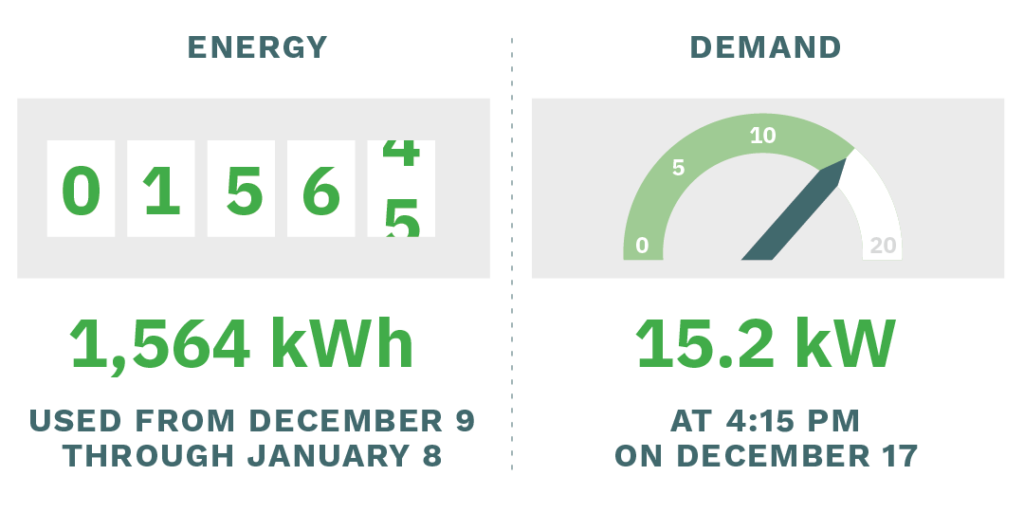
Energy is measured like an odometer, and is the total amount you’ve used over time. Demand is measured like a speedometer, and is how much power you are using in any given moment.
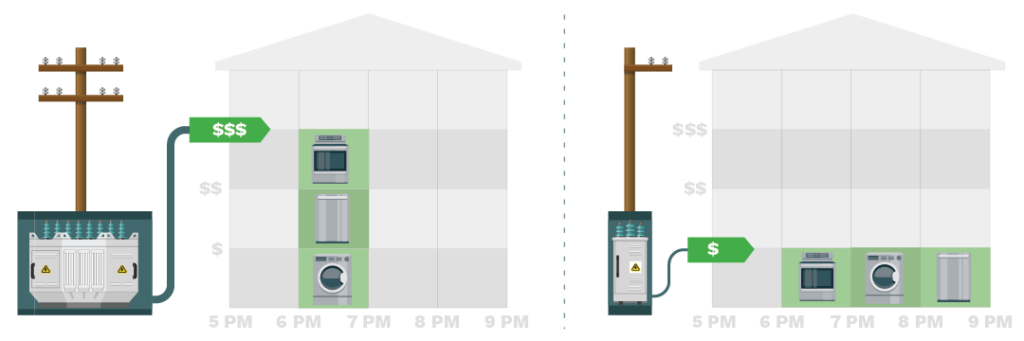
A house that requires more electricity at any given moment requires stronger, more expensive utility electrical infrastructure to provide that much energy at once.
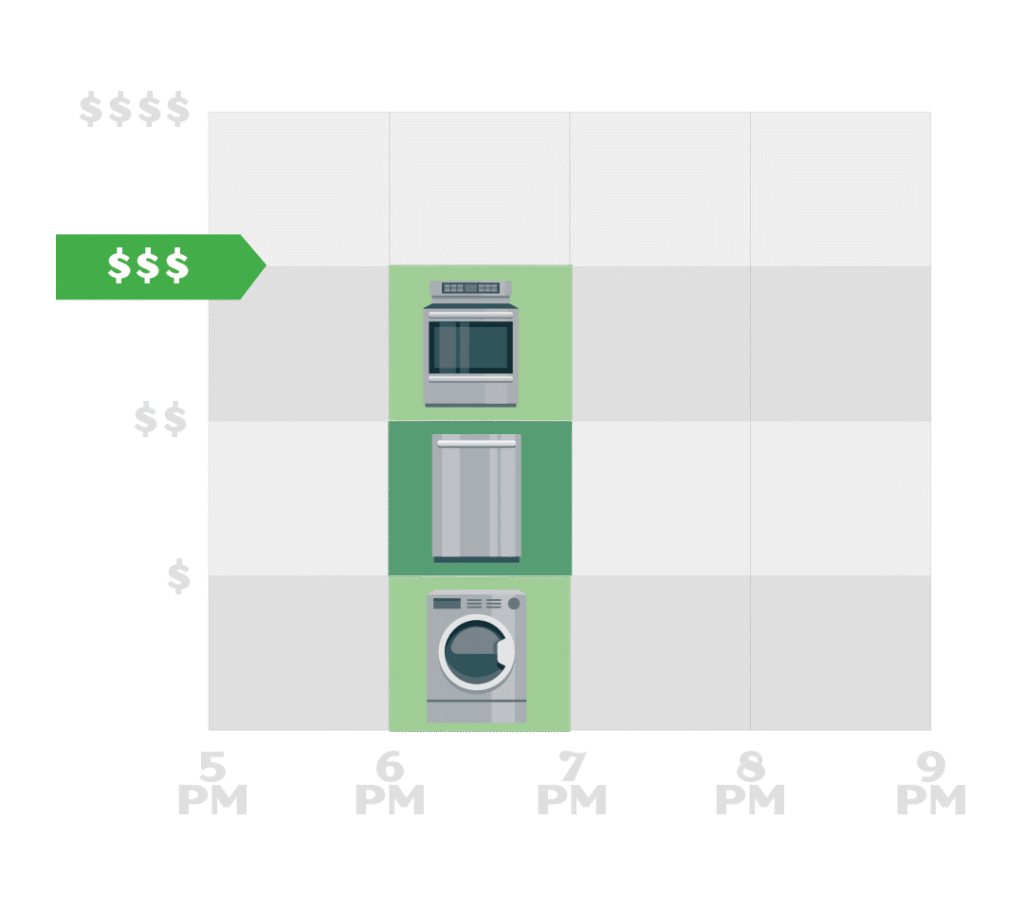
Running several appliances at once increases your demand, increases the strain on the grid, and will lead to a higher bill.
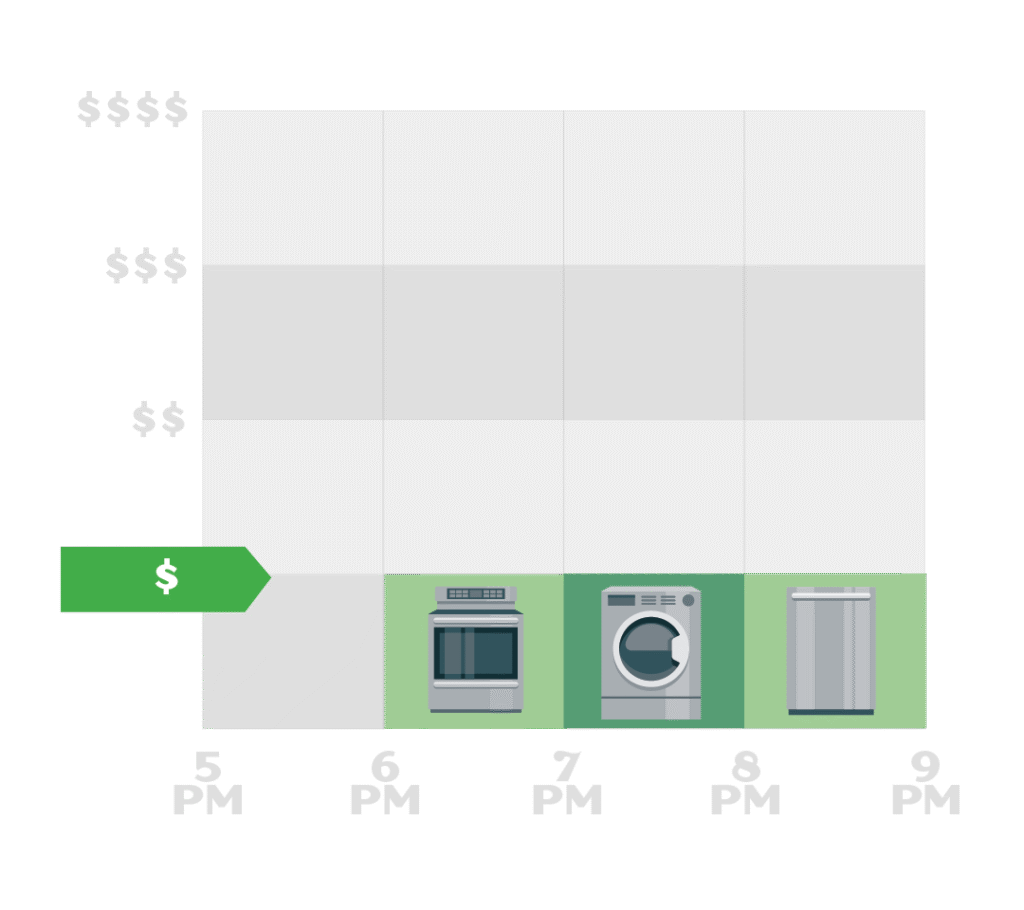
Staggering your appliance usage throughout the day will lead to a lower demand, will lessen the strain on the grid, and can lead to savings on your bill.
By understanding how much power common household devices use, you can make small changes that may help lower your Demand Charge. One of the easiest ways to save is by spreading out your use of high-impact appliances throughout the day.
This list displays some typical, common wattage values of household devices. Remember to check your exact brand and model of appliance or device for exact wattage information.
Tip: 1,000 watts = 1 kilowatt.
These appliances can significantly increase your peak demand, especially if more than one operates at the same time.
Electric furnace: 10–20 kW
Electric boiler: 9-15 kW
Electric clothes dryer: 3–5 kW
Electric water heater (tank): 3–5 kW
Electric oven: 2–5 kW
Electric range burners: 1–3 kW each
Central air conditioner: 2–5 kW
Cold climate heat pump: 2.5-7 kW
Level 2 EV charger: 6–11 kW
Well pump: 0.5–2 kW running (higher at startup)
Tip: Avoid running multiple high-load items simultaneously to keep peak demand lower.
These use a moderate amount of power. Combined with a high-load device, they can contribute to a higher overall peak.
Microwave: 0.6–1.5 kW
Dishwasher: 1–2 kW
Space heater: 1–1.5 kW
Clothes washer: 0.3–0.8 kW
Vacuum cleaner: 0.6–1.2 kW
Toaster: 0.8–1.5 kW
Coffee maker: 0.8–1.2 kW
Induction cooktop (single burner): 1–1.8 kW
Window AC unit: 0.5–1.5 kW
Heat Tape (100 feet): 1 kW
Tip: Running several medium-load devices at once can mimic the impact of a single high-load appliance.
These contribute very little to your peak demand and generally have minimal impact unless many operate at the same time.
Refrigerator: 0.1–0.2 kW
Freezer: 0.1–0.2 kW
TV: 0.05–0.2 kW
Desktop/laptop computer: 0.05–0.25 kW
Wi-Fi router: 0.01–0.02 kW
LED lights: 0.005–0.015 kW each
Phone chargers and small electronics: below 0.02 kW
Tip: These items have minimal effect on demand charges, even if several are in use.
We know electricity use isn’t always flexible. But understanding the size of your home’s peak demand and when it has occurred can help you spot opportunities to reduce demand and potentially save on your bill.
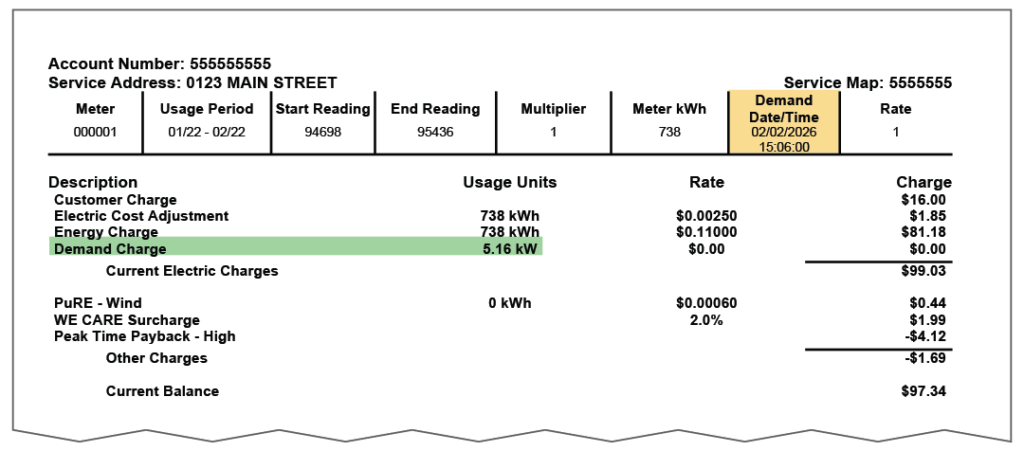
On the back side of your bill, you can find your household’s maximum demand measurement for the month, as well as the time that measurement occurred.
Highlighted here in green, this line item will show your your monthly peak Demand, measured in kilowatts (kW).
Highlighted here in yellow, this area will show you the day and time your peak Demand occurred that billing cycle.
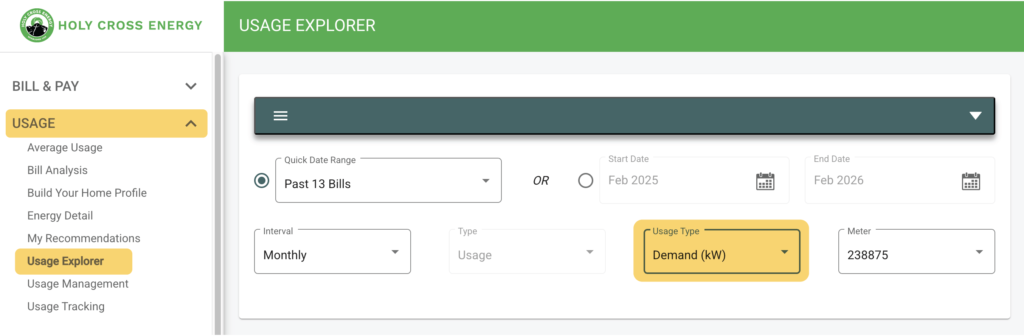
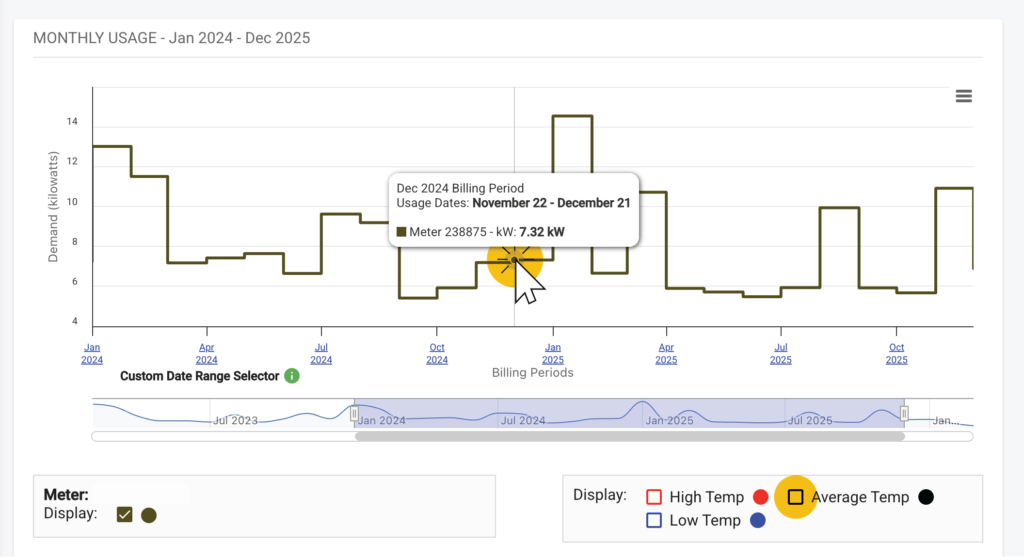
For a bigger picture view, you can log into SmartHub:
Choose an Interval:
In the graph section:
Our Member Services team is here to help you understand your bill. Give us a ring!
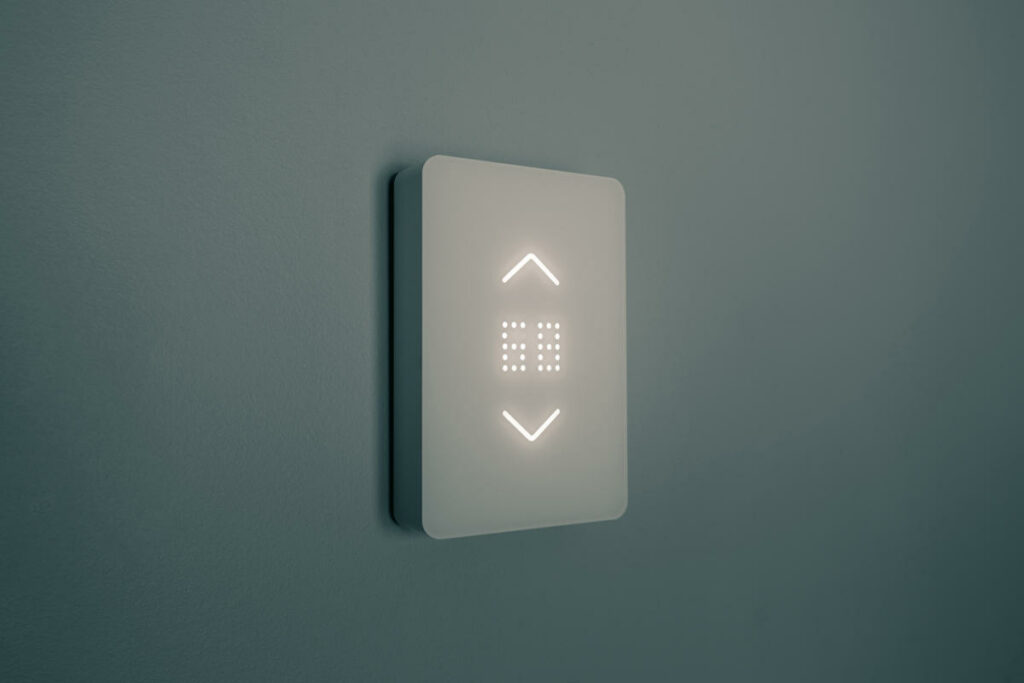
Programmable thermostats and smart devices can help you save! Set a schedule to keep your flexible appliances off during times of the day when you use more electricity.