

 Spanish
Un corte de energía por seguridad pública (PSPS, por sus siglas en inglés) es una medida de seguridad preventiva que se utiliza durante condiciones climáticas extremas y en caso de incendio. Como habrán notado recientemente en las noticias, muchas compañías eléctricas del oeste de Estados Unidos han comenzado a implementar estos protocolos como parte de estrategias más amplias para la mitigación de incendios forestales.
Entendemos que las interrupciones del servicio son perjudiciales. En Holy Cross Energy, solo implementaremos un PSPS como último recurso, después de haber considerado todas las demás medidas de seguridad para reducir el riesgo de incendios forestales.
Los eventos de PSPS son solo una parte de nuestro marco más amplio de preparación ante incendios forestales, que prioriza la seguridad pública.
Nuestro compromiso durante todo el año con la mitigación integral de incendios forestales (que incluye la gestión de la vegetación, las inspecciones proactivas y las actualizaciones y el mantenimiento continuos del sistema) ayuda a garantizar que hagamos todo lo posible para reducir la necesidad de implementar sistemas de protección contra incendios preventivos.
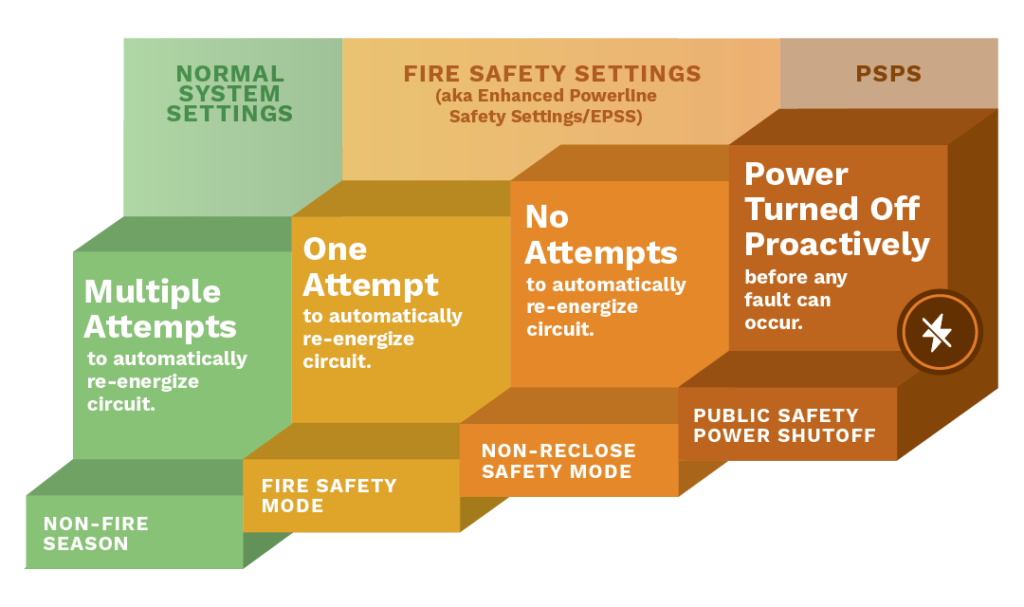
La mayoría de los días del año:
¿Qué es una falla? Se produce una falla cuando la electricidad fluye de manera anormal o no deseada. Esto puede ocurrir por muchas razones comunes, entre ellas:
Si no se abordan rápidamente, ciertas fallas pueden crear arcos eléctricos o chispas, lo que puede suponer un riesgo de incendio forestal durante condiciones secas y ventosas.
Muy común durante la temporada de incendios:
¡Extremadamente raro!
HCE utiliza una evaluación de riesgos basada en percentiles, comparando las condiciones en tiempo real con datos históricos a largo plazo sobre la probabilidad de incendios forestales.
Este enfoque objetivo ayuda a garantizar que las decisiones sobre los cortes de energía programados se basen en datos y se reserven para casos de peligro verdaderamente extremo.
Los criterios que analizamos incluyen, entre otros, los niveles de viento, la temperatura, la humedad relativa, las variables del combustible y los índices de peligro de incendio.
Para minimizar el impacto en nuestros miembros, nuestra área de servicio está dividida en nueve zonas para la configuración de seguridad contra incendios y los eventos de PSPS (corte de energía por seguridad pública). Según las condiciones locales, un PSPS puede afectar a una zona, a varias zonas o a toda el área de servicio.
Por ejemplo, un evento de fuertes vientos combinado con condiciones extremadamente secas en el área de Parachute podría justificar un PSPS en esa zona. Sin embargo, si las condiciones son menos severas en áreas de mayor altitud como Aspen, es posible que esas áreas no se incluyan.
¿Quiénes serán notificados y cuándo?
Diariamente, el personal de HCE supervisa las condiciones actuales y futuras para determinar la posible implementación de configuraciones de seguridad contra incendios y/o PSPS.
Si las condiciones indican un posible PSPS, pasaremos a las siguientes categorías:
¿Cómo se me notificará?
Le proporcionaremos actualizaciones oportunas para ayudarle a prepararse y mantenerse informado. Los métodos de notificación pueden incluir:
Las condiciones actuales y futuras se supervisan diariamente para determinar la posible implementación de ajustes de seguridad contra incendios y/o un corte de energía por seguridad pública (PSPS).
Indica que pueden desarrollarse condiciones de evento PSPS en las próximas 72 horas.
Su objetivo es proporcionar información a quienes necesitan un tiempo de antelación considerable para prepararse ante un posible suceso, como por ejemplo, los gestores de emergencias, los servicios de emergencia y los proveedores de infraestructuras críticas.
Indica que existe riesgo de un evento PSPS dentro de las próximas 48 horas ha aumentado significativamente, pero su ocurrencia exacta, ubicación y/o momento aún son inciertos.
Su objetivo es proporcionar tiempo suficiente para que quienes necesiten poner en marcha sus planes puedan hacerlo.
Indica que un evento de PSPS es inminente o tiene una probabilidad muy alta de ocurrir dentro de las próximas 24 horas en distritos, circuitos o áreas de notificación específicas.
Utilizado como último recurso, solo en las condiciones más extremas, se tomará una decisión final 4 horas antes de la hora programada para el evento PSPS, lo que permite realizar los preparativos finales y las notificaciones a la comunidad.
Nuestro objetivo es anteponer la seguridad de nuestros miembros y comunidades a todo lo demás.
El suministro eléctrico se restablece tan pronto como es seguro hacerlo, tras inspecciones exhaustivas y en orden de importancia crítica.
A continuación encontrará más información sobre nuestro proceso de restauración.
Restablecer el suministro eléctrico de forma segura es nuestra máxima prioridad. Antes de volver a energizar cualquier línea, nuestros equipos realizan inspecciones exhaustivas para garantizar:
Un corte preventivo del suministro eléctrico puede durar desde varias horas hasta más de un día en casos excepcionales. El suministro se restablece tan pronto como es seguro hacerlo, y en orden de importancia crítica.
Prioridades de restauración:
Holy Cross Energy se compromete a:
Tome medidas ahora para mantenerse seguro y preparado en caso de que se produzca un corte de energía programado:
No todos los cortes de energía durante la temporada de incendios están relacionados con la configuración de seguridad contra incendios o con un corte de energía por seguridad pública. Las interrupciones de energía también pueden deberse a:
Si se corta la luz, revise siempre primero el interruptor principal. Después de eso, nuestro mapa de interrupciones en línea , muestra la información más actualizada disponible sobre la mayoría, pero no sobre todas, las interrupciones confirmadas.
Un corte de energía por seguridad pública (PSPS, por sus siglas en inglés) es una medida de seguridad que Holy Cross Energy (HCE) puede implementar durante períodos de peligro extremo de incendios forestales. Consiste en una interrupción temporal y selectiva del suministro eléctrico destinada a reducir la probabilidad de que los equipos eléctricos provoquen un incendio forestal cuando las condiciones (como fuertes vientos, baja humedad y vegetación seca) generan un riesgo excepcionalmente alto.
HCE puede considerar un PSPS cuando varios indicadores de riesgo de incendios forestales coinciden en niveles extremos (normalmente vientos o ráfagas fuertes, humedad muy baja, combustibles inusualmente secos e índices elevados de peligro de incendio).
Un PSPS se considera una medida de último recurso después de que se hayan aplicado otras medidas de mitigación y configuraciones operativas.
HCE utiliza una evaluación de riesgos basada en percentiles, comparando las condiciones en tiempo real con datos históricos a largo plazo sobre condiciones meteorológicas propicias para incendios. Este enfoque objetivo ayuda a garantizar que las decisiones sobre los sistemas de protección contra incendios se basen en datos y se reserven para situaciones de peligro realmente extremo.
HCE utiliza un proceso de notificación escalonado basado en las condiciones previstas de incendios forestales. A medida que aumenta la certeza sobre la necesidad de declarar un evento de PSPS (corte de energía por seguridad pública), las notificaciones se vuelven más frecuentes y más específicas para las zonas afectadas.
No. Los eventos de PSPS son respuestas específicas a las áreas donde el riesgo es mayor. Debido a las variaciones del terreno y los patrones de viento en nuestros valles, las condiciones varían significativamente. Por lo tanto, su hogar o negocio podría no verse afectado, incluso si las comunidades cercanas sí lo están.
HCE ha categorizado nuestro territorio de servicio en 9 zonas distintas, basándose en las características de riesgo de incendio y en la optimización de los escenarios de conmutación/interrupción y los tiempos de respuesta.
La duración del PSPS varía en función de:
Un corte preventivo del suministro eléctrico puede durar desde varias horas hasta más de un día en casos excepcionales. El suministro se restablece tan pronto como es seguro hacerlo, y en orden de importancia crítica.
Tras casi una década de esfuerzos constantes, HCE continúa fortaleciendo y reforzando de forma proactiva su red eléctrica resistente a incendios forestales. Este trabajo incluye la sustitución de reconectadores obsoletos por dispositivos electrónicos inteligentes; la actualización de las normas de construcción de ingeniería; la eliminación de fusibles de expulsión; la realización de inspecciones anuales con drones e infrarrojos; y la implementación de técnicas específicas de gestión de la vegetación y refuerzo del sistema aéreo.
En HCE, confiamos en la fiabilidad y la resistencia de nuestra infraestructura eléctrica. Solo se considerará un corte preventivo del suministro eléctrico cuando las condiciones ambientales naturales generen un riesgo elevado de incendio forestal catastrófico para la seguridad de nuestros miembros.
Energía e iluminación
Alimentos y agua
Calor, salud y seguridad
Comunicación
Si usted o alguien en su hogar depende de la electricidad para equipos médicos:
La restauración tras un PSPS normalmente requiere:
En algunos casos, las interrupciones pueden estar relacionadas con operaciones a nivel de transmisión que escapan al control directo de HCE. Si un proveedor de transmisión inicia un corte preventivo o sufre una interrupción, esto puede afectar el servicio a algunos miembros de HCE.
HCE trabajará en estrecha colaboración con nuestro proveedor de transmisión para comunicar posibles eventos de PSPS relacionados con la transmisión a medida que se disponga de la información y para registrar el proceso de notificación de PSPS de HCE.
Nuestros equipos trabajan siempre para restablecer el suministro eléctrico de la forma más rápida y segura posible.
La seguridad siempre será nuestra prioridad. Entendemos que las interrupciones del servicio pueden ser un inconveniente y agradecemos sinceramente su paciencia y comprensión durante las situaciones de alto riesgo de incendio. Estas medidas se toman para proteger lo que más importa: nuestros miembros, nuestras comunidades y los lugares que todos llamamos hogar.